Lucrecia Martel’s “Nuestra Tierra” Explores Indigenous Struggles in Argentina
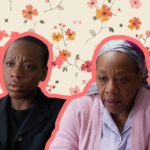
Acclaimed Argentine filmmaker Lucrecia Martel dives deep into the complexities of language, identity, and colonization in her powerful new documentary, “Nuestra Tierra (Our Land).” In her director’s statement, Martel highlights the crucial role of language, stating, “This film works with our mother tongue and its racist complexities, which prevent many from accessing a vital space.” The documentary addresses not only the tragic murder of Javier Chocobar in 2009 but also sheds light on the indigenous Chuschagasta community, who have inhabited Tucumán Province for generations in the face of systemic erasure.
- Lucrecia Martel’s “Nuestra Tierra” Explores Indigenous Struggles in Argentina
- Lucrecia Martel: A Life Shaped by Storytelling
- The Salta Trilogy and Beyond
- Intersecting Technology and Humanity in “Nuestra Tierra”
- Archiving Personal Histories
- The Power of Dialogue and Representation
- Contradictions of History
- Martel’s Political Cinema
- Inspirations and the Future of Filmmaking
Martel masterfully transforms a narrative that appears to be a simple true-crime story into a compelling exploration of indigenous oral histories and the bureaucratic struggles faced by marginalized communities. Through her lens, she reveals the intricate dance between cinema, memory, and the legacy of colonial oppression.
Lucrecia Martel: A Life Shaped by Storytelling
Born in Salta, Argentina, Martel grew up in a family where storytelling was an art form, influenced significantly by her upbringing among six siblings. Her early fascination with mythology and languages led her to an ultra-Catholic school, where she studied Greek and Latin. Martel initially aspired to study physics but shifted her focus to art history at the National University of Salta.
Martel’s cinematic journey began when she enrolled in advertising courses while simultaneously pursuing film education at the Film Art Institute of Avellaneda. Though her ambitions took a brief detour when her initial film school closed, she embraced self-directed learning, even famously watching “Pink Floyd: The Wall” 23 times to master montage techniques.
The Salta Trilogy and Beyond
Martel’s early works, known as the Salta Trilogy—comprising “La ciénaga” (2001), “The Holy Girl” (2004), and “The Headless Woman” (2008)—each focus on women’s narratives that challenge societal norms. In 2017, she adapted “Zama,” spotlighting a Spanish colonizer’s existential struggles in colonial Paraguay. These films have enjoyed acclaim at international film festivals, solidifying Martel’s status as a key player in New Argentine Cinema.
Intersecting Technology and Humanity in “Nuestra Tierra”
During a recent interview, Martel discussed her innovative use of drone technology in “Nuestra Tierra.” While drones originated as surveillance tools, she utilized them to provide a humanistic perspective on the Chuschagasta community’s relationship with their land. “Every time a new technology comes out, we take a bit of time to change the meaning of what it was born out of,” Martel commented. By incorporating drone footage alongside community voices, she aimed to create a dialogue that transcends the historical and oppressive connotations of colonialism.
Archiving Personal Histories
Martel’s dedication to the Chuschagasta community extends to her integration of personal photo archives that reveal family histories often overlooked in mainstream narratives. For nearly a decade, she built trust with community members, leading them to share their intimate archives. She described how Chocobar’s widow provided the first glimpses into personal photographs that depicted joyous moments, offering a rich contrast to the pain endured.
These shared memories fostered a sense of community and provided a platform for their stories. “I think for the Argentinian public, it was impactful to see photographs that highlighted the desire for self-portraiture among a community that is often misrepresented,” she noted.
The Power of Dialogue and Representation
In “Nuestra Tierra,” dialogue emerges as a double-edged sword, highlighting the inherent power dynamics between the Chuschagasta community and the larger Argentine society. Martel emphasizes the complexity of this relationship, noting, “In those dialogues, there’s always a negotiation on the land, and inevitably, whenever the mainstream population comes into contact with the indigenous communities, they’re always the ones that end up losing.”
She expresses concern over the idealization of indigenous relationships with their land, rejecting narratives that overlook their struggles with the state’s bureaucracy and racism. “I wanted to show the superposition of the community with the rest of the Argentinian population,” Martel explained.
Contradictions of History
Martel’s approach also plays with contrasts in her storytelling. She juxtaposes dialogue with footage that might contradict the narrative being presented, creating a layered understanding of historical truths. “In any country that was a colony, there is this contradiction between what you learn in school and what you see in the country,” she reflected, emphasizing the dissonance between language, history, and identity.
Martel’s Political Cinema
As she reflects on her career, Martel sees film as a vehicle for public discourse rather than a platform for personal expression. “I wanted to intervene in public discourse and my community’s story,” she shared. Acknowledging the political nature of her work, she asserts that her explorations are ultimately human and universal. “I think of political activity as simply part of citizenship.”
The long journey of crafting “Nuestra Tierra,” now nearing two decades of reflection, has reshaped Martel’s understanding of cinema’s potential. She experienced profound moments during screenings where audience members from the indigenous community engaged with the film, illustrating the power of storytelling to bridge divides.
Inspirations and the Future of Filmmaking
As Martel continues her impactful storytelling, she highlights the importance of female storytellers, singling out her colleague María Alché, who directed “A Family Submerged” and “Puan.” Her work and those who inspire her serve as a reminder of the significant contributions women make in the film industry.
In conclusion, Lucrecia Martel’s “Nuestra Tierra” serves as a poignant exploration of history, identity, and the resilience of marginalized communities. By harnessing the power of personal narratives, innovative technology, and a commitment to social justice, Martel crafts a documentary that not only informs but inspires.
To stay updated on this exciting release and explore more engaging content, check out MyAxom Reviews for the latest reviews and news regarding the entertainment industry. For more information and updates on upcoming shows and movies, visit MyAxom Movies Review. Don’t miss out on the latest trends and news in entertainment on MyAxom Box Office.