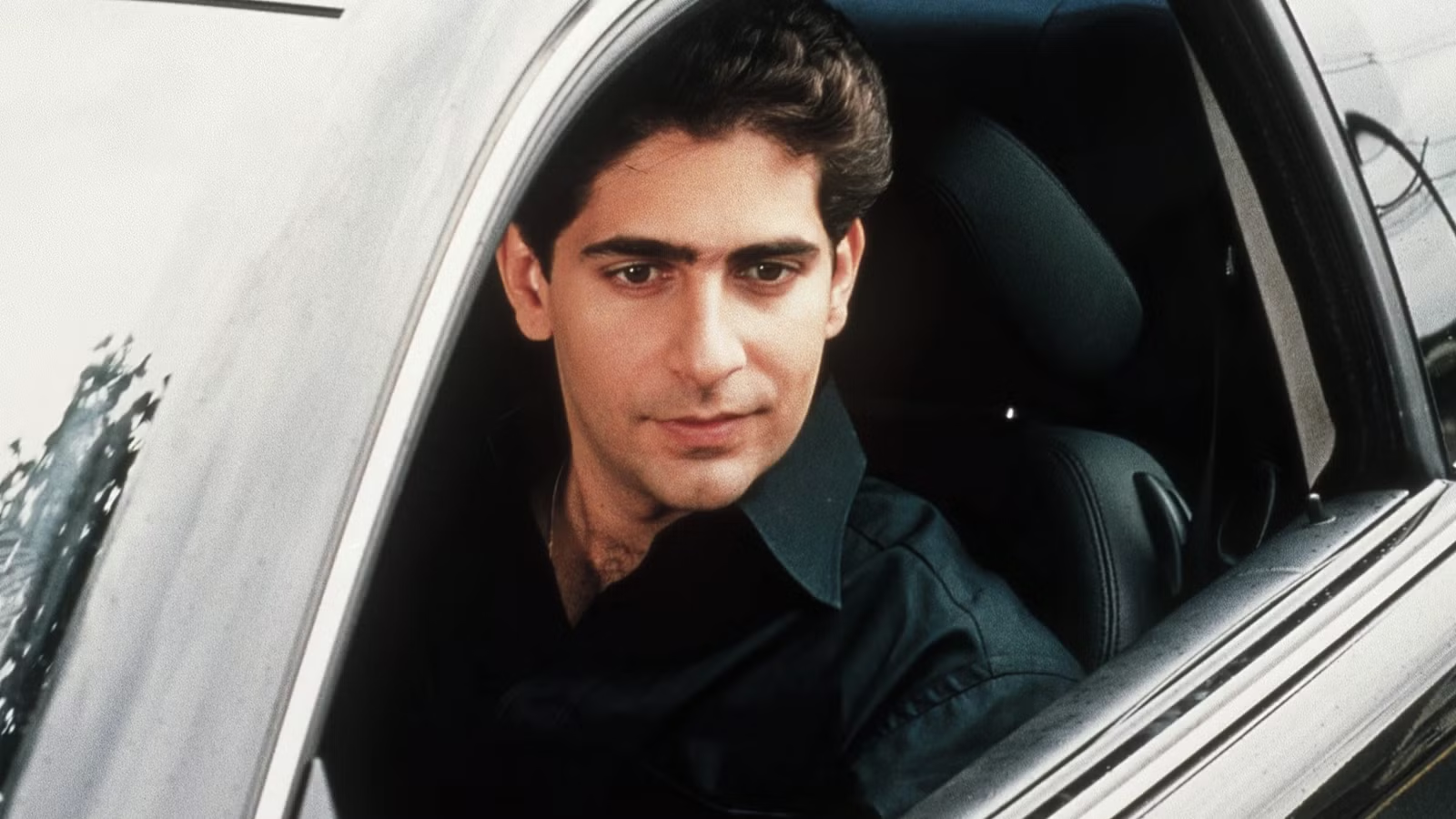
Celebrity culture has always lived on a knife’s edge. Admiration can inspire, but it can just as easily curdle into fixation. Alex Russell’s feature debut, Lurker, steps directly into that uneasy space, delivering a tense, unsettling look at obsession in the age of proximity—where stars feel close enough to touch, yet remain fundamentally unreachable.
The film draws immediate comparisons to Eminem’s “Stan,” and for good reason. Like that iconic track, Lurker examines what happens when emotional need collides with fame. It joins a growing lineage of cautionary tales about parasocial relationships, echoing the psychological unease of Ingrid Goes West and the feral intensity of Swarm—but with a distinctly masculine lens.
Inside the World of Lurker
At its core, Lurker is about two men on very different trajectories. Oliver (Archie Madekwe) is a rising musician brushing against real success. Matthew (Théodore Pellerin) is a lonely admirer searching for meaning, identity, and proximity to something—or someone—he believes can save him.
Their first meeting feels accidental, almost charming. They connect inside a fashionable Los Angeles clothing store, bonding over a Nile Rodgers track. But that casual encounter quickly becomes the crack through which Matthew slips into Oliver’s life. What begins as friendly admiration hardens into something more calculated, more invasive.
As Matthew embeds himself deeper into Oliver’s orbit, the film exposes the fragility of fame. Oliver’s world is filled with people, yet built on shallow connections. Friendships feel provisional. Loyalty is fleeting. In that environment, obsession doesn’t just survive—it thrives.
Obsession, Masculinity, and Power
One of Lurker’s most compelling choices is its focus on male obsession—a subject far less explored on screen. Where many films frame fixation through female characters, Russell turns the camera toward male loneliness, entitlement, and emotional repression.
Matthew isn’t portrayed as a cartoon villain. Pellerin plays him with unnerving restraint, allowing vulnerability and menace to coexist. Early on, Matthew seems harmless—awkward, eager, almost sweet. But as his need for validation grows, so does his willingness to manipulate. His fixation becomes a form of control.
Madekwe’s Oliver, meanwhile, starts off effortlessly charismatic. He embodies the confidence of someone on the verge of breaking through. Yet Matthew’s relentless attention begins to drain him. What once felt flattering turns suffocating. The imbalance of power slowly shifts, and the tension becomes impossible to ignore.
The dynamic speaks directly to contemporary conversations around male identity, isolation, and the hollow promise of fame as a substitute for purpose.
A Supporting Cast That Grounds the Story
The film’s atmosphere is reinforced by a sharp supporting cast, including Havana Rose Liu and Zach Fox. Their characters flesh out Oliver’s social circle—friends who hover between genuine concern and quiet self-interest.
This ensemble captures the peculiar paranoia of creative spaces in Hollywood, where everyone is watching everyone else, and trust is always conditional. No one feels entirely safe. No one feels entirely real.
Their presence adds texture to the story, reminding viewers that obsession doesn’t exist in isolation—it feeds on environments that reward proximity to power and visibility.
Celebrity Culture in the Age of Access
What Lurker understands better than most films about fame is how social media has rewritten the rules. The distance between fan and celebrity has collapsed. Access feels constant. Boundaries feel optional.
Matthew’s obsession doesn’t grow in a vacuum—it’s nurtured by a culture that encourages emotional investment without accountability. Likes, follows, backstage passes, and “inner circle” illusions blur the line between admiration and entitlement.
As the film progresses, Lurker asks uncomfortable questions:
Is friendship possible when one person holds all the cultural power?
At what point does attention become exploitation?
And how much responsibility does fame carry for the people it attracts?
Russell doesn’t offer easy answers. Instead, he lets the discomfort sit.
Final Thoughts: Why Lurker Works
Lurker isn’t reinventing the obsession thriller—but it doesn’t need to. Its strength lies in focus. By centering male loneliness and emotional dependency, the film feels timely in a way that’s hard to ignore.
Yes, some narrative beats are familiar. Seasoned viewers may anticipate where certain turns are headed. But the performances—especially Pellerin’s—keep the story gripping. His portrayal lingers long after the credits roll.
Alex Russell’s debut is confident, controlled, and observant. Lurker works not just as a psychological drama, but as a warning—about what happens when identity is outsourced to proximity, and when admiration is mistaken for connection.
In a world increasingly defined by fame, access, and illusion, Lurker feels less like fiction and more like a mirror.
For more thoughtful film reviews and deep dives into modern cinema, visit
👉 MyAxom Reviews
👉 MyAxom Movie Reviews