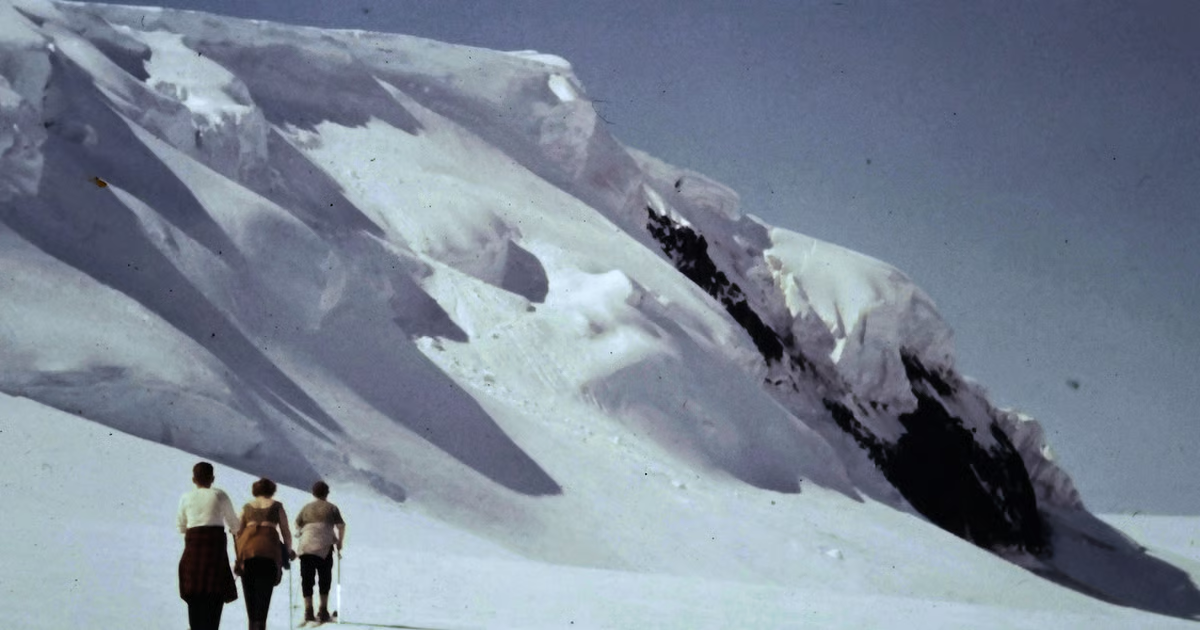
In a world increasingly grappling with the effects of climate change, Sara Dosa’s documentary Time and Water emerges as a poignant reflection on our relationship with nature. With an introductory line that resonates profoundly—“I cannot send you a glacier, but at least I can send you this”—the film delivers not just a message, but a heartfelt narrative for future generations. Drawing on the impactful writings of Icelandic poet Andri Snær Magnason, Dosa weaves a rich tapestry of family photographs, archival footage, and current visuals illustrating the alarming fate of Iceland’s glaciers.
Emotional Connection Through Personal Storytelling
The essence of Time and Water lies in its ability to capture the personal amidst the vastness of climate realities. The film is narrated by Magnason, who guides viewers through the lives of his grandparents, glaciologists Hulda and Árni. Their extensive research contributed significantly to the archival material presented, blending the personal with the scientific. Through this captivating lens, Dosa deftly illustrates that our environmental crises are not just ecological; they are crises of memory and identity.
Memory and the Creep of Time
Utilizing an unconventional narrative structure, Time and Water flows like memory itself, favoring association over a sequential timeline. As viewers are taken on a meditative journey through stunning visuals of Iceland’s melting ice formations, the film harnesses the haunting sounds of shifting ice accompanied by Dan Deacon’s ethereal score. The blend of these elements stirs a sense of wonder while serving as a stark reminder of glaciers as living entities. Magnason poignantly remarks, “I often think about the unsettling quiet of a glacier’s death.” This subtlety elevates the film beyond mere documentation, prompting deeper reflections on nature’s fragility.
The Arc of Grief and Responsibility
Though laced with a sense of grief, Time and Water never spirals into despair. The film revisits the poignant memorial of Okjökull, the first glacier declared dead due to climate change, leaving viewers with Magnason’s haunting Letter to the Future: “We know what is happening and what needs to be done. Only you know if we did it.” In redefining climate change as a crisis of remembrance, Dosa achieves a delicate balance between loss and accountability, reminding audiences of our responsibility to cherish and uphold the memory of what we stand to lose.
Visions of Hope Amidst Loss
Throughout its narrative, Time and Water suggests that acknowledging and preserving memories tied to our environment can foster a sense of hope. The film invites viewers to consider the delicate balance between mourning the past and taking action for the future. The blend of scientific insight and personal history serves as a call to action for all to participate in climate consciousness and environmental stewardship.
Final Thoughts: A Call to Remember and Act
In an era where climate narratives often evoke feelings of helplessness, Time and Water stands out as a reminder not only of what we are losing but also of what we can still save. Through Dosa’s lens, we are encouraged to embrace our collective memory and the stories of those who came before us. As we continue to grapple with the realities of a changing planet, the haunting melodies of Time and Water linger, prompting each of us to consider our role in preserving this Earth for future generations.
For more insights and discussions about captivating films, check out our movie reviews at MyAxom Reviews and stay updated on the latest in the film industry.