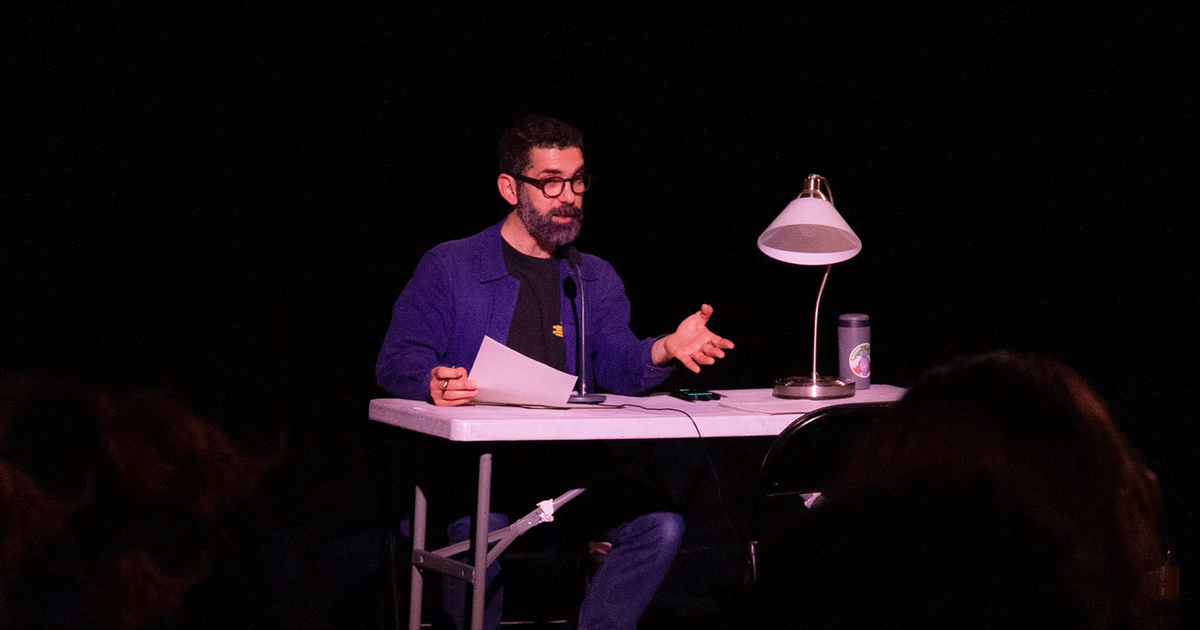
As a Palestinian filmmaker, Farouky has witnessed the complex relationship between art and activism in the film industry. His experiences highlight the challenges that radical filmmakers face in a landscape increasingly dominated by apolitical narratives.
The Shift to Apolitical Narratives
In recent years, mainstream film forums have increasingly adopted a value system that sidelines politically charged content. This shift poses significant risks for filmmakers who challenge the status quo, especially those like Farouky who purposefully use their platforms to speak out against injustices, including genocide. Despite the dangers, Farouky and fellow Palestinian filmmakers have bravely participated in prestigious international film events, including the Berlinale.
Grassroots: A New Space for Radical Expression
Faced with the constraints of mainstream cinema, a solution emerges: grassroots screening spaces. Farouky emphasizes the adaptability of projects like his, which are designed to evolve with contemporary social issues. “The film school operates on a unique model that values feedback from both new and experienced filmmakers,” he says, illustrating the mutual respect for fresh perspectives and innovative ideas.
Renewing Cinema from Within
What makes the project particularly compelling is its approach to national funding. Farouky doesn’t outright reject it; instead, he advocates for a strategy that renews the industry from within. His inspiration stems from iconic filmmaker Jean-Luc Godard, known for his revolutionary stance against the conventional norms of cinema. Godard famously disrupted the Cannes Film Festival during the student protests of 1968, embodying the spirit of activist filmmaking.
Challenges of Today’s Film Landscape
As creatives navigate the harsh realities of relying on commercial funding, questions arise: What role does cinema play in activism today? Initiatives like the RFS partnership with the London-based Open City Documentary Festival offer significant insights. For the 2026 edition, a former participant from the film school organized a workshop addressing the plight of imprisoned Palestinian activists, creating a platform for solidarity.
Exploring Creativity Through Solidarity
The workshop, titled Letters to a Revolutionary, educated attendees to craft messages of support through various media, including physical letters and video messages. Farouky remarks, “Even making someone laugh is a subversion of the prison system; it fosters a sense of community.” The essence of this initiative underscores that the conversations and networks formed among filmmakers offer resilience, even when their work might face censorship.
Building Conversations in Filmmaking
The RFS also incorporates discussions with seasoned industry professionals who address the realities of career mobility and challenges faced by marginalized communities. “We engage in open, off-the-record conversations,” Farouky shares. This creates a nurturing environment for students to voice their concerns, asking questions about breaking into the film industry and addressing systemic issues like racism and classism.
Making Film Accessible to All
It is inspiring to see figures within the industry advocating for a more inclusive and accessible film culture. As censorship rises, the pulse of cinema in London continues to resonate with solidarity and hope. Filmmakers today are reimagining the medium, drawing inspiration from historical movements like the Soviet pioneers and Third Cinema that pushed for revolutionary change across global filmmaking landscapes.
Conclusion: A Movement Towards Change
The continued evolution of grassroots filmmaking, led by figures like Farouky, signifies a vital shift in the industry. As the RFS aims to champion voices and narratives often relegated to the margins, it solidifies its place as a pivotal force in redefining what cinema can achieve. As filmmakers unite in pursuit of a more equitable industry, the future of radical cinema looks promising, energetic, and, most importantly, collective.
For more insights into movie reviews and industry trends, visit MyAxom Reviews. Dive into broader discussions around film culture at MyAxom Reviews or explore our coverage of music and cinema trends at MyAxom Music Reviews.