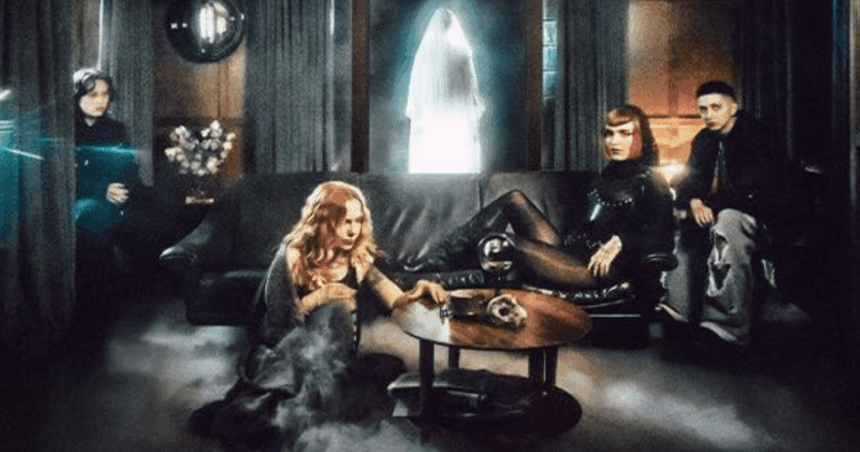
The Financial Struggles of Touring Musicians: Witch Fever’s Eye-Opening Story
In a striking revelation that’s sure to rattle the music community, UK doom-punk band Witch Fever has shared their shocking financial struggles following a two-month stint as the opening act on a major arena tour. Their journey included performances at renowned venues like Wembley Arena, supporting the Danish rock giants Volbeat. Surprisingly, instead of securing a stable income, the band finds themselves in a dire financial situation.
- The Financial Struggles of Touring Musicians: Witch Fever’s Eye-Opening Story
- Witch Fever: “We’re Broke as F***”
- The Broader Picture: A Precarious Music Industry
- Australian Musicians: Facing Similar Challenges
- Aarons and Major Labels: The Illusion of Security
- The Unseen Costs of the Music Industry
- Conclusion: A Call for Change in the Music Industry
Witch Fever: “We’re Broke as F***”
During a candid conversation on the latest episode of the 101 Part Time Jobs podcast, bassist Alex Thompson detailed how, despite being compensated with fees that should have covered their expenses, the band’s profits are entangled in withholding taxes across various European nations. “We got to the end of it… and our profit is all stuck in withholding taxes across Europe,” he explained, showcasing the unexpected financial pitfalls many musicians face today.
Singer Amy Hope Walpole didn’t mince words, stating, “So we’re broke as f*** – and we just did two months in arenas.” Their plight is exacerbated by the fact that they cannot take up casual work ahead of their next tour in March, leading to further financial strain. “Nowhere will hire us,” Walpole lamented.
The Broader Picture: A Precarious Music Industry
The situation faced by Witch Fever is not an isolated incident. According to the UK Musicians’ Census, a staggering 43% of UK musicians earn less than £14,000 (approximately AUD $27,650) a year from their musical endeavors. The aftermath of Brexit has introduced obstacles such as expensive permits, additional paperwork, and lengthy administrative processes for artists looking to tour in Europe, compounding the challenges faced by musicians.
Despite the UK music industry generating a record £8 billion (AUD $15.8 billion) in 2024, growth has slowed significantly, with many artists witnessing a decline in touring income. The UK’s creative industries minister acknowledged that EU touring has become “simply not economically viable” for a growing number of artists, highlighting the unsustainable reality of the current music landscape.
Australian Musicians: Facing Similar Challenges
The struggles highlighted by Witch Fever resonate strongly with Australian artists, who already face their own set of daunting challenges. Massive geographical distances, exorbitant travel expenses, and the complexities of domestic touring—where thousands of kilometers often separate shows—complicate the touring landscape. For Aussie bands, international tours can be financially catastrophic when unexpected issues arise.
As Sarah Woods, CEO of Help Musicians, aptly noted, the modern music career is increasingly “financially precarious.” Rising costs, relentless red tape, and a shortage of funding opportunities are pushing more artists towards financial instability.
Aarons and Major Labels: The Illusion of Security
Despite being signed to Music For Nations, a subsidiary of Sony Music, Walpole’s experiences emphasize that even with the backing of major labels, success in the music industry doesn’t guarantee financial security. Witch Fever’s story serves as a sobering reminder that for many bands, touring does not pave a straightforward path to stability. Instead, it often involves navigating a risky gamble that can leave them in a worse position than when they began.
The Unseen Costs of the Music Industry
The nuances of Witch Fever’s situation shed light on the broader, often overlooked issues within the music industry. While the spotlight typically shines on the glitz of arena stages and sold-out tours, the underlying financial ramifications can be devastating for many artists. It’s a complex web of expenses, from touring logistics, accommodation, and marketing, to the intricacies of tax regulations, all of which can chip away at an artist’s potential earnings.
Walpole revealed that she is currently relying on her late mother’s pension to stay afloat, which she received last year but is quickly depleting. Her situation exemplifies the precarious nature of musicians’ finances, where success in the public eye doesn’t translate to personal financial stability.
Conclusion: A Call for Change in the Music Industry
Witch Fever’s eye-opening account serves as a vital reminder of the harsh realities that many musicians confront in their careers. While the industry may be booming at surface level, the grim truth is that visibility does not equate to sustainability. As we move forward into an increasingly complex music landscape, it’s imperative for industry stakeholders to reevaluate the structures and regulations that govern touring, ensuring that artists receive the support they need to thrive.
To stay updated on this exciting release and explore more engaging content, check out MyAxom Reviews for the latest reviews and news regarding the entertainment industry. For more information and updates on upcoming shows and movies, visit MyAxom Movies Review. Don’t miss out on the latest trends and news in entertainment on MyAxom Box Office.