The Haunting Legacy of John Wayne Gacy: Insights from “Devil in Disguise”
In the realm of true crime, few names evoke as much horror as John Wayne Gacy. His monstrous deeds are encapsulated in the chilling quote, “If the devil’s alive, he lived here,” a line attributed to a worker involved in the demolition of Gacy’s house and shared in the Chicago Tribune. This infamous killer has become a subject of fascination and revulsion as we continue to explore the darker corners of human nature.
A Macabre Encounter with Gacy’s Legacy
Having worked as a news columnist in the 1990s, I had the unsettling opportunity to access the Cook County records facility, where evidence against Gacy still echoes with horror. Among the items I encountered was a square-shaped piece of lumber—the hatchway to the crawlspace; Gacy’s haunting hand-drawn diagram marking the locations of buried victims; a piece of rope utilized in his gruesome strangulations; and various personal items that collectively tell the story of a serial killer’s reign of terror.
I was only 20 when Gacy was arrested in December 1979, but the shadows of the case would follow me throughout my career. As I penned various columns about the case, including interviews with victims’ families, I began to grasp the human impact of Gacy’s heinous crimes. Over the years, I met investigators and lawyers depicted in the Peacock series “Devil in Disguise: John Wayne Gacy,” reinforcing the ongoing relevance of this case and its profound effects on those involved.
“Devil in Disguise”: A Respectful Retelling
“Devil in Disguise” stands out as a respectful procedural. While Gacy remains a focal point, the series also highlights the voices of his victims and their families, as well as the law enforcement and legal teams who pursued justice. Each episode, apart from the first, concludes with archival material, including news photos, courtroom sketches, and snapshots of critical evidence. Notably, Episode 2 features Gacy’s crudely drawn map, a haunting reminder of the case I encountered decades ago.
The portrayal of Gacy in this series is devoid of glamorization; he is depicted as a grotesque figure—a self-titled clown and failed political operative—embodying the unsettling concept of “the banality of evil.” The series does not shy away from the grisly truth, offering a poignant reminder of the pain endured by the victims and their loved ones.
A Chilling Performance
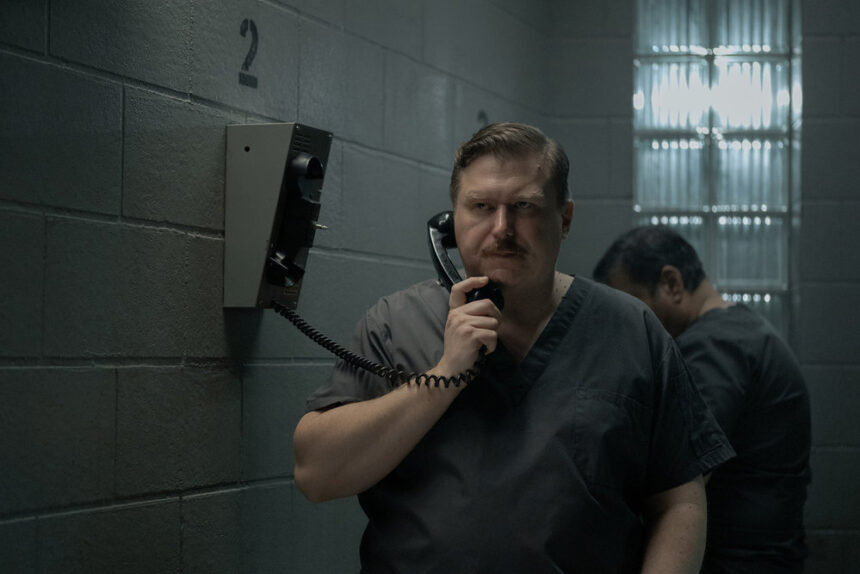
Amid the strong supporting performances, Michael Chernus’s depiction of Gacy is chilling and unforgettable. As the library of portrayals of serial killers continues to expand, the audience often remembers the standout performances. Notably, awards buzz surrounds portrayals like Darren Criss’s turn as Andrew Cunanan in “The Assassination of Gianni Versace” or Evan Peters’s Golden Globe-winning role as Jeffrey Dahmer in “Monster: The Jeffrey Dahmer Story.” While the fascination with true crime grows, it often leads to heightened interest in the performers who bring these real-life monsters to life.
The True Crime Phenomenon
Our society’s obsession with true crime is rooted in a complex psychological tableau. We are drawn to the thrill of horror, whether through heart-pounding roller coasters or haunted houses. True crime offers a rare glimpse into the macabre reality of real-life tragedies and crimes. We find ourselves yearning to understand and analyze notorious figures like Gacy or Bundy, transforming them into modern mythological figures who continue to haunt our collective imagination.
This allure is evident in the numerous portrayals of infamous criminals across various media platforms. Almost ten actors, including Mark Harmon and Zac Efron, have taken on the role of Ted Bundy alone. Today, these historical figures resonate in our nightmares in ways that fictional horror icons fail to replicate. Unlike characters such as Michael Myers or Jason Vorhees, Gacy’s real-life atrocities provoke fear that feels immediate, palpable, and terrifyingly real.
The Ethical Question in True Crime
This leads us to ponder the ethics of our consumption of true crime narratives. We may feel a tinge of guilt when grappling with entertainment derived from such horrific realities. For instance, while viewing “Monster: The Ed Gein Story,” I found myself questioning the purpose behind its portrayals. The controversial musical number featuring Ed Gein left me uneasy and questioning the line between entertainment and exploitation.
Discussions about the accuracy and integrity of such portrayals abound, often eliciting critiques about the sensationalism of the genre. Articles like “What ‘Monster: The Ed Gein Story’ Gets Right and Wrong” from Rolling Stone and “10 Details ‘Monster: The Ed Gein Story’ Got Wrong” from Entertainment Weekly address these concerns, albeit with varying interpretations of intent. Nevertheless, perhaps the reality these showrunners wish to highlight remains a delicate balance between storytelling and moral responsibility.
Conclusion: The Intrigue of Horrors
The legacy of John Wayne Gacy serves as a grim reminder that the stories of monsters come with deep scars from real lives. While series like “Devil in Disguise” make commendable efforts to focus on victims and their families, all true crime narratives walk a fine line between intrigue and exploitation. Ultimately, even with our mix of horror and respect, we remain unable to resist the allure of the stories behind the atrocities, and our fascination with them continues unabated.
To stay updated on this exciting release and explore more engaging content, check out MyAxom Reviews for the latest reviews and news regarding the entertainment industry. For more information and updates on upcoming shows and movies, visit MyAxom Movies Review. Don’t miss out on the latest trends and news in entertainment on MyAxom Box Office.