Unveiling the Vision Behind “The Testament of Ann Lee”
In her latest film, “The Testament of Ann Lee,” director Mona Fastvold delves into the complex life and beliefs of Ann Lee, the founder of the Shaker movement and one of the few prominent female religious leaders of the 18th century. The film, described by Fastvold as a “speculative retelling,” stars Amanda Seyfried in a powerful performance, highlighting the radical expressions of Lee’s spirituality amid personal tragedy and societal rejection.
Key Highlights of the Film
Born in 1736 in Manchester, England, Ann Lee faced considerable adversity. Raised in a large, impoverished family, she was often exposed to the harsh realities of life that shaped her beliefs. Her family’s living conditions ignited a detestation for physical intimacy, leading her to question the norms of the Church of England. Eventually, Lee found solace in the teachings of the “Shaking Quakers,” a sect promoting cleansing through expressive prayer practices.
Tragedy struck when Lee lost four children in infancy, prompting her to denounce traditional gender roles and advocate for spiritual purity and communal living. Her revolutionary teachings attracted controversy, leading to her imprisonment in a mental asylum for what the Church deemed heretical beliefs. Following her release, she journeyed to America with her followers to spread her gospel and escape persecution.
Fastvold’s Creative Journey
While working on her previous film, “The World to Come,” Fastvold discovered a collection of Shaker worship songs that inspired her to explore Ann Lee’s life and the utopian community she envisioned. Despite the Shakers’ modern fame for their furniture, Fastvold was captivated by Lee’s role as a pioneering female religious figure and her quest for societal transformation in late 1700s America.
The film’s musical elements, featuring original compositions based on traditional Shaker hymns and choreographed by Celia Rowlson-Hall, reflect the ecstatic worship of Lee and her followers. The extensive rehearsal process aimed to intertwine movement and music seamlessly, culminating in an intense 34-day shooting schedule.
Behind the Scenes with Fastvold
Fastvold co-wrote the script with her husband, Brady Corbet, and they previously collaborated on “The Brutalist,” another narrative exploring themes of faith and trauma. As they worked on both projects concurrently, Fastvold found parallels between the immigrant experiences of Lee and the character László Tóth from “The Brutalist.” The exploration of trauma’s influence on their faith and creativity highlighted the contrasting ways each character copes with their past.
“What is fascinating to me about Ann Lee is that she is egoless,” Fastvold explains, emphasizing that Lee’s motivation stemmed from a desire to nurture a loving community rather than seeking personal acclaim as a religious leader. This focus on collective devotion reflects a departure from the ego-driven narratives often depicted in stories about leaders.
Exploring Themes of Community and Devotion
One of the film’s significant sequences, “Beautiful Treasures,” captures Ann’s profound grief and yearning through a combination of movement and montage. Through this creative approach, Fastvold communicates the agonizing yet ecstatic emotions surrounding Lee’s loss and transformation. The intricate choreography, performed by Seyfried and Christopher Abbott, aims to portray the sacredness of motherhood, intimacy, and loss.
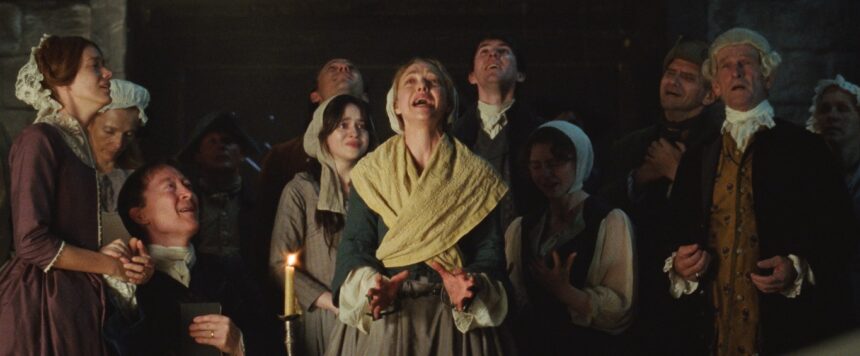
The worship scenes within the film encapsulate the essence of Lee’s teachings. Fastvold describes the movement as communal expressions of faith, allowing group members to channel their emotions through song and dance. The filmmakers worked meticulously to develop a “communal language of movement” that grounded the performances in authenticity.
The Visual and Cinematic Techniques
Fastvold and her team, including cinematographer William Rexler, strategized the camera placements to ensure a dynamic, immersive experience during worship scenes. The intent was to capture the essence of communal devotion while keeping the camera engaged in the action, giving audiences a sense of being swept up in the spiritual fervor.
Filming logistics presented another challenge, especially aboard a wooden sailing ship designed to depict Lee and her followers’ journey across the ocean. Fastvold faced time constraints and limited resources, necessitating creative solutions to achieve the grand atmosphere necessary for the film.
Conclusion: The Testament of Ann Lee
As “The Testament of Ann Lee” gears up for its limited theatrical release on December 25, it promises to be both a visual spectacle and an emotional exploration of faith, motherhood, loss, and community. Through Fastvold’s directorial lens, audiences are invited to witness the extraordinary journey of a woman who challenged societal norms in pursuit of radical love and equality. With Amanda Seyfried’s stunning performance, this film may become a significant entry in the canon of cinematic portrayals of historical female leaders.
To stay updated on this exciting release and explore more engaging content, check out MyAxom Reviews for the latest reviews and news regarding the entertainment industry.
For more information and updates on upcoming shows and movies, visit MyAxom Movies Review. Don’t miss out on the latest trends and news in entertainment on MyAxom Box Office.