The Odyssey Review: Christopher Nolan’s Epic Adaptation and Its Deeper Themes
By: Divya Pal | Published: July 17, 2026
Christopher Nolan’s latest masterpiece, The Odyssey, transcends the traditional narrative of epic adventures. It serves as a profound examination of heroism, honor, and the ravages of war, drawing upon the timeless story of Homer’s nearly 3,000-year-old epic. With a stellar cast led by Matt Damon, Tom Holland, and Anne Hathaway, the film invites audiences to reconsider the archetype of the hero.
The Genesis of a Monumental Film
For this adaptation, Nolan chose to reference Emily Wilson’s acclaimed 2017 translation of Homer’s work, making her the first woman to translate this epic into English. Unlike previous adaptations that viewed the story as a whole, Nolan opts to spotlight the emotional core of the narrative. Each sequence is distilled down to its essence, ensuring that the film is both lean and deeply personal.
At its heart, The Odyssey explores Odysseus’s torturous journey home to Ithaca, parallel to the emotional narratives that define Nolan’s previous works, such as Inception and Interstellar. Odysseus embodies the quintessential flawed hero—brilliant yet deeply humane—as he navigates a labyrinth of challenges that keep him away from his beloved wife, Penelope.
Reinterpreting Iconic Moments
The film revitalizes moments that have become staples in epic storytelling. The encounter with the Cyclops, Polyphemus, represents more than just a monstrous confrontation; it serves as an unsettling commentary on the violence that often accompanies war. Similarly, Circe’s transformation of Odysseus’s men into pigs is portrayed with haunting realism, focusing on the horror and emotional turmoil of such a fate.
Nolan also pays homage to Virgil’s Aeneid by reimagining the legendary Trojan Horse sequence. This thrilling centerpiece is not drenched in CGI; rather, it builds tension through silence and meticulous choreography, reflecting the precision of a heist. As Odysseus and his men remain trapped within the horse, the film echoes themes present in Nolan’s earlier works, grounding the epic scale through human vulnerability.
Craftsmanship Beyond CGI
Renowned for minimal reliance on CGI, Nolan delivers breathtaking visuals that amplify the story’s emotional depth. The sequences involving Polyphemus showcase masterful craftsmanship, while the grotesque transformations during Circe’s moment underscore the unsettling reality of Odysseus’s trials. Audiences will find themselves captivated by the creatures and rich landscapes brought to life on screen.
The Sea as a Character
The cinematography by Hoyte van Hoytema transforms the “wine-dark sea” into a complex character—beautiful yet fearsome. As Odysseus treads the ocean, audiences are constantly reminded of the physical and temporal distance from his family. Each wave serves as a metaphorical ticking clock, heightening the film’s emotional stakes and culminating in an unforgettable descent into the underworld.
Character Depth and Emotional Resonance
While Odysseus faces external threats, life in Ithaca continues without him. His son, Telemachus, portrayed by Tom Holland, idolizes his father from afar, showcasing the complexities of familial relationships. Anne Hathaway delivers a powerful performance as Penelope, embodying a woman of resilience and emotional depth. Despite being underappreciated by her son and the suitors vying for her hand, she portrays a depth of character that resonates with viewers.
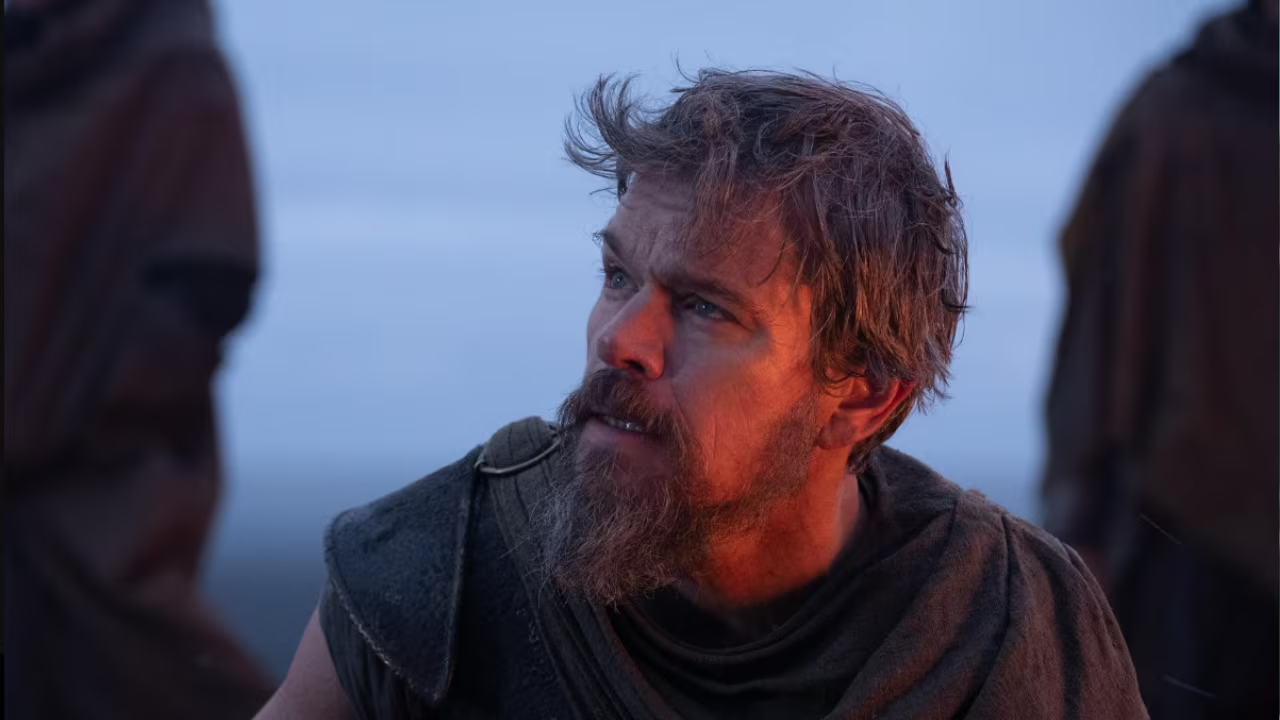
Matt Damon’s portrayal of Odysseus reveals a character marked by flaws and stubborn pride. His actions lead to devastating consequences, illustrating how self-inflicted tragedies define his journey. The ensemble cast, including Robert Pattinson, Zendaya, and others, effectively supports the narrative, creating a rich tapestry of characters that enhance the film’s themes.
A Reflection on War and Honor
What sets The Odyssey apart is its examination of the Trojan War’s myths not just as tales of glory but as stories of destruction driven by ego and pride. Nolan transforms the narrative into a contemplative piece that encourages viewers to question conventional notions of heroism. By the film’s end, it’s evident that triumph comes at a steep price, steering the audience toward a more complex understanding of sacrifice.
The Final Verdict
In essence, The Odyssey encapsulates more than an epic adventure. Christopher Nolan’s nuanced adaptation prompts a reevaluation of enduring themes surrounding heroism and sacrifice. Intertwining sophisticated storytelling with emotional gravitas, the film pays homage to Homer while providing a fresh lens through which to appreciate the classic narrative. For anyone intrigued by adaptations that resonate with timeless conflicts and human experiences, Nolan’s The Odyssey is a must-watch.
For more reviews, visit MyAxom Reviews or explore our movies review section.