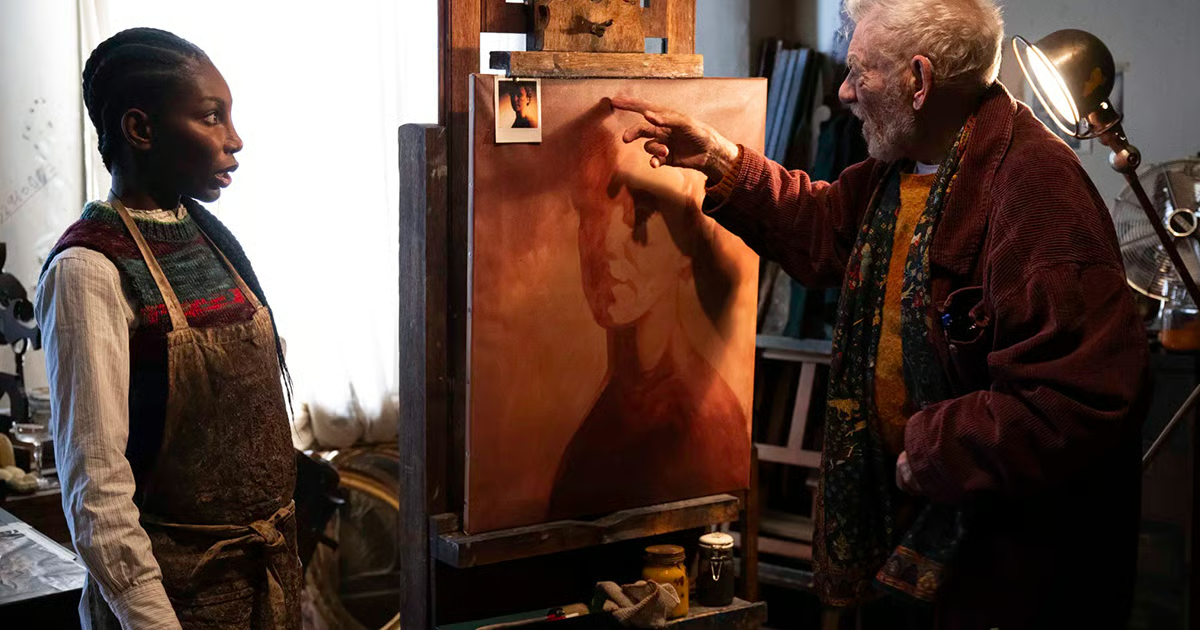
In the world of art, the distinction between what is genuine and what is forged often blurs, raising questions about authenticity and the value of creativity. In The Christophers, director Steven Soderbergh delves into this complex narrative through the story of Lori Butler, an art restorer tasked with an ambitious and morally ambiguous project. This article explores the film’s artistic intricacies and the dialogues surrounding originality and authorship.
The Plot: A High-Stakes Art Forgery
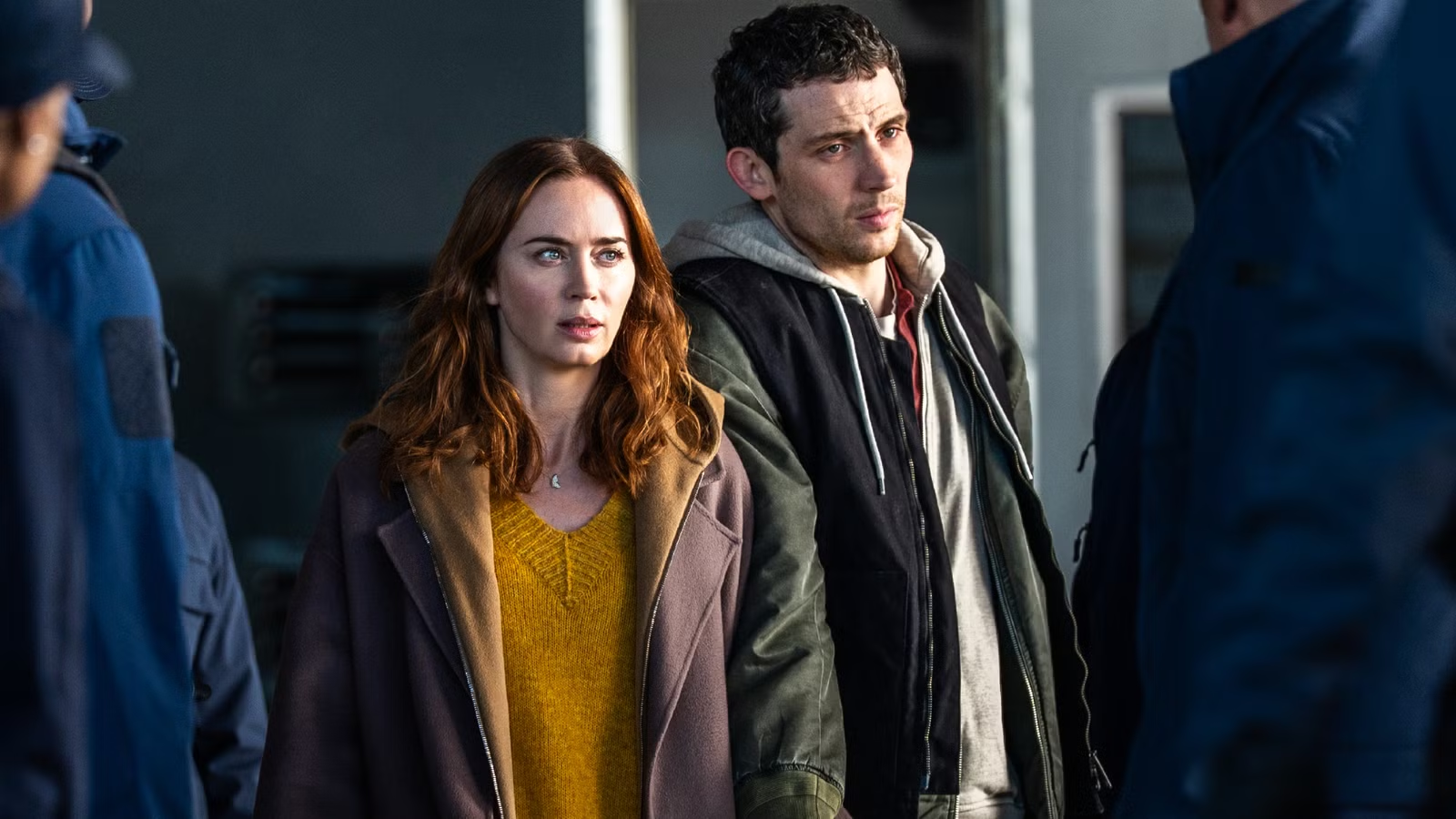
The Christophers revolves around Lori Butler, played by Michaela Coel, who becomes embroiled in a scheme to produce forgeries of portraits by the renowned artist Julian Sklar, who halted his work on an unfinished series back in the 1990s. The paintings, initially celebrated for their artistic merit, are now left to gather dust in Sklar’s attic, awaiting a sharp mind capable of reintroducing them to the art market. This narrative not only engages the audience with its suspense but also pushes them to reflect on the complexities of artistic integrity—what makes a painting valuable and who gets to claim authorship?
Behind the Scenes: Crafting Authenticity
Art director Antonia Lowe, together with scenic painter Barnaby Gorton, worked diligently to breathe life into the visual storytelling of The Christophers. They faced the unique challenge of creating paintings that convincingly appeared to be the work of Julian Sklar, and they undertook this task by researching artists like Lucian Freud and Francis Bacon, who epitomized the London art scene during the time Sklar was active.
According to Lowe, the aim was to evoke authenticity through both the artwork and the narrative framework. “We had very little prep time and shoot time,” she noted, “so we focused on creating a cohesive backstory for the character of Julian Sklar.” This allowed the creative team to establish a visual representation that not only felt true to the character but also resonated emotionally with viewers.
Collaboration and Vision: A Quick-Paced Production
The rapid production schedule placed both Lowe and Gorton under immense pressure, yet it proved to be a catalyst for innovation. “We created 16 initial paintings in just a week, allowing Steven to select the eight that made the final cut,” Gorton explained. This fast-paced environment often leads to more instinctive decision-making, a creative advantage when reconstructing Sklar’s vision.
The collaboration between the creative team and director Soderbergh was key throughout the process. Gorton described the first stage of art production as “hands-off,” stating that they worked independently with an understanding of the immediate needs. As production progressed, they received guidance on how bold and expressive the final artwork should be, emphasizing the film’s thematic essence.
Artistic Style: Evolving Interpretations
As the project evolved, the conversation shifted from merely recreating Sklar’s unfinished works to embracing an enhanced artistic flair. “The second stage of paintings is much more figurative and expressive,” Gorton noted. Soderbergh encouraged an audacious approach to color and texture, culminating in striking pieces that diverged from what Sklar originally intended. This led to a fascinating transformation both visually and narratively.
Lowe emphasized the focus on the emotional depth in each piece. “We wanted the character of young Christopher, who is central to the portraits, to evoke real connection and focus,” she shared. This decision meant that background details were intentionally blurred, emphasizing the subject’s face and expression, allowing for a deeper emotional resonance.
Conclusion: The Intersection of Art and Ethics
The Christophers serves as a compelling lens through which to examine the intersections of art, authorship, and ethics in creativity. Lori Butler’s journey epitomizes the struggle between upholding artistic integrity and succumbing to the allure of success through compromise. As audiences watch her navigate this intricate landscape, they are invited to consider their own perspectives on what it means to create and the value attributed to authenticity in the world of art. The film not only tells a thrilling story but also engages viewers in a broader discourse on creativity and the moral dilemmas intrinsic to artistic endeavors.
For those intrigued by the rich narrative and artistic intricacies highlighted in The Christophers, deeper explorations can be found on MyAxom Reviews and other resources such as Wikipedia and IMDb. Be sure to stay informed about this thought-provoking film and the discussions it sparks in the art community.